At our hospital, we provide treatment for ligament and tendon injuries using mesenchymal stem cells derived from the patient’s own adipose (fat) tissue.
For this treatment, we have formulated a “Type II Regenerative Medicine Plan,” which has been reviewed by the Certified Regenerative Medicine Committee and submitted to the Minister of Health, Labour and Welfare.
Regenerative Medicine Plan Provision Number: PB5240088
Regenerative Medicine Using Mesenchymal Stem Cells
Stem Cell Therapy for Ligament, Tendon, and Muscle Injuries
* All regenerative medicine treatments for ligament, tendon, and muscle injuries using mesenchymal stem cells derived from the patient’s own adipose tissue are provided as self-funded (out-of-pocket) medical care.
What Are Mesenchymal Stem Cells?
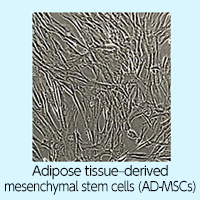
Mesenchymal stem cells are cells that exist throughout the body, including in bone marrow and fat tissue, and have the ability to differentiate into various types of cells.
In particular, adipose tissue allows for the efficient collection of a large number of stem cells. Because they can be harvested from subcutaneous fat with minimal damage or burden to the body, they are widely used in regenerative medicine.
What Is Stem Cell Therapy for Ligament, Tendon, and Muscle Injuries?
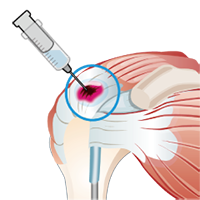
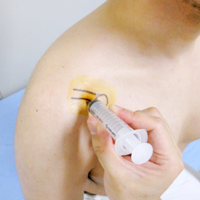
By injecting cultured mesenchymal stem cells into damaged ligaments, tendons, or muscle tissue, this therapy promotes tissue regeneration and repair, reduces inflammation, and helps improve symptoms such as pain, restricted movement, and joint instability.
01Trusted Specialist in Charge
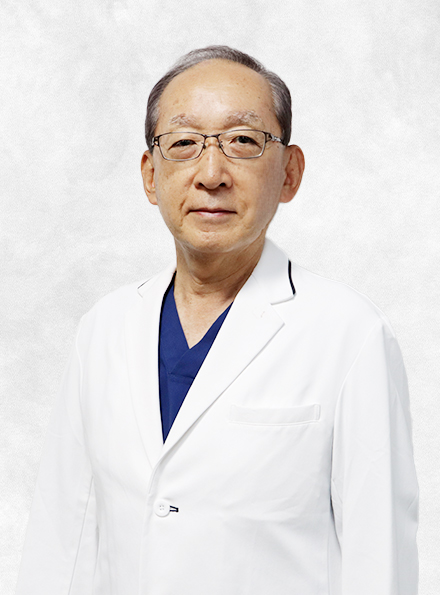
Careful consultation and treatment by Dr. Minoru Yoneda, selected as a “Best Doctor.
Clinical Advisor Minoru Yoneda,MD
Doctor of Medicine (PhD)
Board-Certified Orthopedic Surgeon, Japanese Orthopaedic Association & Japanese Board of Medical Specialties
Certified Sports Doctor, Japan Medical Association
Certified Physician in Orthopaedic Rehabilitation Medicine, Japanese Orthopaedic Association
Career History
July 1996 Chief, Department of Orthopedic Surgery, Osaka Welfare Pension Hospital (currently JCHO Osaka Hospital)
May 2003 Clinical Professor, Faculty of Medicine, Osaka City University
April 2009 Clinical Professor, Faculty of Medicine, Osaka University
October 2015 Specially Appointed Professor, Department of Orthopedic Surgery, Nippon Medical School
Academic Society Memberships
Honorary Member, Japanese Orthopaedic Society for Sports Medicine
Honorary Member, Japanese Society for Surgery of the Shoulder
Representative, Japan Shoulder Arthroscopy Research Society
Representative, Osaka Shoulder Arthroscopy Forum
Advisor, Sports Medicine Forum
ISAKOS (International Society of Arthroscopy, Knee Surgery and Orthopaedic Sports Medicine): Honorary Member
French Society of Arthroscopy: Honorary Member
Korean Shoulder and Elbow Society: Honorary Member
Awards & Honors
1990 Academic Award, 16th Annual Meeting of the Japanese Shoulder Society
1998 AOA International Traveling Fellow, American Orthopaedic Association
1998 Academic Award (Mentorship), 24th Annual Meeting of the Japanese Shoulder Society
2006 Academic & Medical Award, Osaka Welfare Pension Hospital
2015 Academic Award (Mentorship), 42nd Annual Meeting of the Japanese Shoulder Society
2015 Alumni Award, Department of Orthopedic Surgery, Nippon Medical School
2020 Distinguished Service Award, Japanese Orthopaedic Association
Best Doctors, The Best Doctors in Japan 2024–2025
Doctor of Doctors Network – Distinguished Specialist Clinician
02In-House Cell Culturing
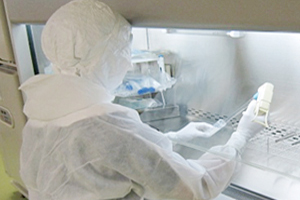
Within our group, we have established a system that manages the entire process consistently — from harvesting to processing and administration. This enables us to provide treatment with stable quality and ensured safety.
03Team-Based Medical Practice
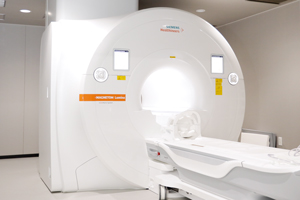
In addition to stem cell administration, patients receive periodic imaging examinations such as 3-Tesla MRI scans, along with appropriate exercise guidance provided by rehabilitation staff, based on the imaging results.
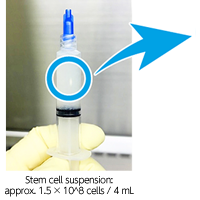
At the cell processing facility, mesenchymal stem cells are isolated from the adipose tissue and cultured until the required number of cells for treatment (150 million to 300 million) is reached.
6) Cell Administration
On the day of administration, the mesenchymal stem cells cultured at the processing facility are prepared and transported according to the treatment schedule.
The transported mesenchymal stem cells are then administered to the affected treatment site in the Department of Orthopedic Surgery.
7) Post-Treatment Follow-Up
After cell administration, regular follow-up consultations and MRI scans are conducted.
(Typical schedule: 3 weeks, 6 weeks, 3 months, and 6 months after cell administration — total of 4 visits)
Cost
Consultation fees
Blood tests
Fat tissue harvesting
Medications (such as antibiotics)
Stem cell culturing and expansion
Stem cell administration and related equipment
Please contact us for pricing information.
Please note: MRI scans and other imaging tests performed during follow-up consultations after stem cell administration are considered self-funded treatments and will incur additional charges.
Treatment Effects果
By reducing inflammation, this therapy is expected to promote the healing and regeneration of damaged tissues.
Since your own cells are used, there is no risk of rejection.
Side Effects of Treatment
Because this therapy uses your own fat-derived stem cells, the likelihood of allergic reactions or rejection is considered extremely low.
However, as the procedure involves injections, it is not possible to completely eliminate the risk of infection or other complications.
To minimize such risks, we implement strict hygiene control and infection prevention measures.
Before treatment, we will provide a detailed explanation. Please feel free to ask us any questions or share any concerns you may have.
Patients Who Are Not Eligible for This Treatment
Patients with hypersensitivity to anesthetics used during tissue collection or substances used in the manufacturing process
Patients with a history of allergic reactions to antibiotics used during cell culturing
Patients who test positive for viral or bacterial infections (e.g., HIV, syphilis, etc.)
Underage patients
Pregnant or breastfeeding patients
Patients diagnosed with cancer
Patients with severe obesity (BMI ≥ 40)
Patients found to have abnormalities during preoperative coagulation tests