






Family Planning and Contraception
Happy New Year. I believe that those reading this column are likely either currently attending our obstetrics department during pregnancy or have already given birth. For those who are still pregnant, this topic may seem a little early. However, before you know it, pregnancy will come to an end, followed by childbirth and the busy days of raising a child. Therefore, I thought that gaining some knowledge while you still have time may be even a little helpful for your future family planning, which is why I decided to write this article.
For married couples—or even for two people who are life partners regardless of marital status—physical intimacy and sex are considered important forms of deep communication. However, as is widely known, when men and women in their reproductive years have sex, pregnancy may result. If this is the desired outcome for both partners, it is certainly something joyful. On the other hand, there are cases where it may not be desired. This applies not only to unmarried couples, but also to married couples who may feel, “We have just had a baby and are overwhelmed with childcare, so another pregnancy would be physically difficult at this time.” In such situations, knowledge about contraception becomes very important.
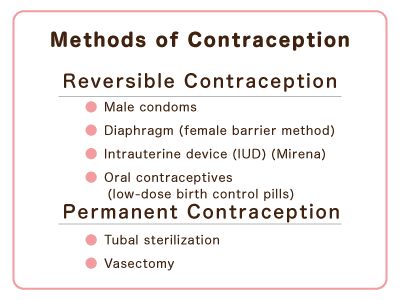
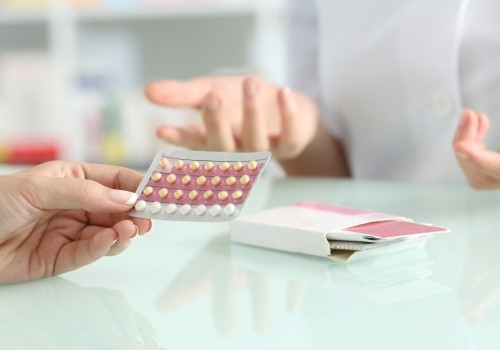
Here is an overview of contraceptive methods currently available in Japan. Among temporary contraceptive methods, low-dose oral contraceptive pills are considered the most effective. However, low-dose pills are only effective when they are taken continuously and exactly as prescribed.
For those who feel it may be difficult to continue taking pills regularly, another option is the insertion of a contraceptive intrauterine device (IUD) containing hormones. Although it needs to be replaced every five years, no additional contraceptive measures are generally required while it is in place. However, because there is a risk of intrauterine infection, if symptoms such as fever or abdominal pain occur after insertion, you should promptly visit an obstetrics and gynecology clinic. In some cases, hospitalization and treatment may be necessary.
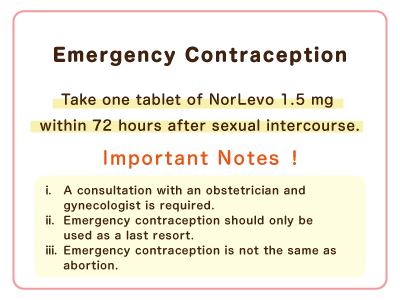
In cases where contraceptive failure is clear, such as condom breakage, or in cases such as sexual assault, emergency contraception may be considered as an option. This method involves taking one tablet of NorLevo 1.5 mg within 72 hours. However, the contraceptive effectiveness is said to be approximately 95% if taken within 24 hours after intercourse, 85% within 48 hours, and 58% within 72 hours.
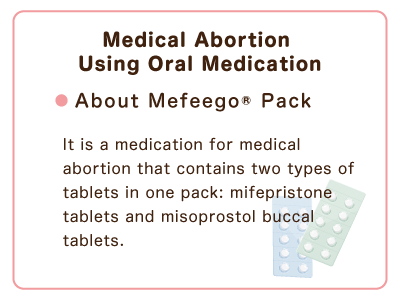
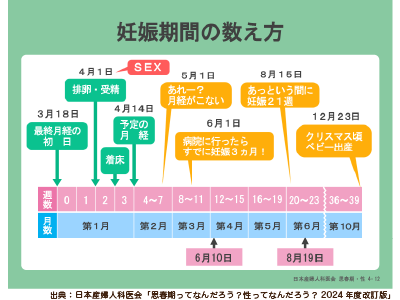
There may also be situations in which pregnancy occurs despite taking contraceptive measures. In such cases, induced abortion may become one of the available options. At the end of the year before last, medical abortion using oral medication was approved in Japan. Our hospital has also obtained approval from the Ministry of Health, Labour and Welfare and will begin offering this treatment from January 2026. Although it can generally be used up to 9 weeks and 0 days of pregnancy, our hospital has set the eligibility limit at up to 8 weeks and 0 days of pregnancy in consideration of safety. Please visit the obstetrics and gynecology outpatient clinic for further details. We hope that by providing this option at an earlier stage of pregnancy, we may help reduce, even slightly, the physical and emotional burden on women who would otherwise undergo surgical abortion.